0% Points
Back to home
Case study — Pukaar.ai01 / 11
Case study

Pukaar.ai: From a Baby's Cry to an Answer in 90 Seconds
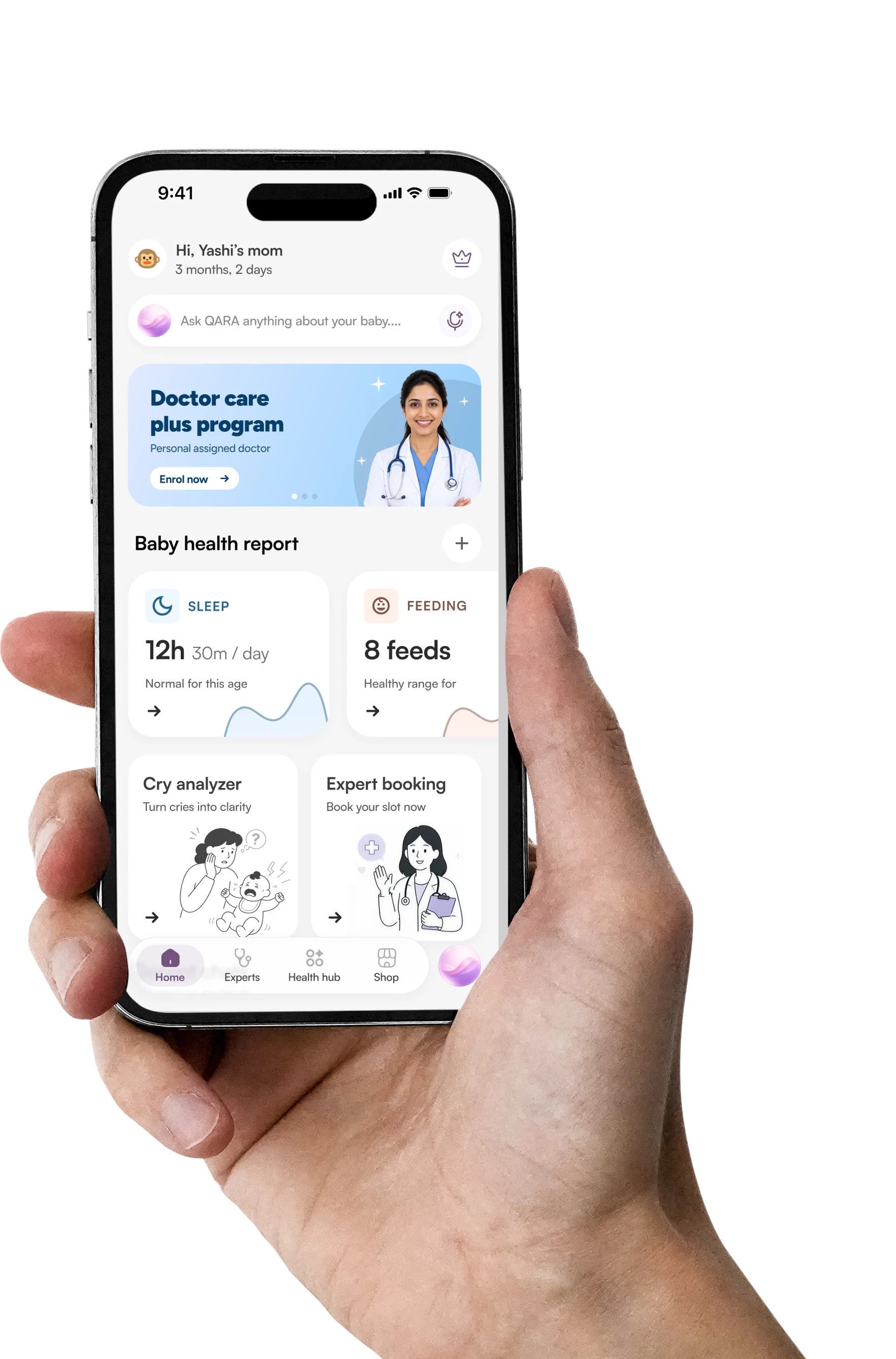

Redefining babycare, reimagining parenthood — 70+ interviews, a 400-parent community, and a doctor-led answer at 2 a.m.

Sanju VishwashPukaar.ai
Pukaar.ai
Case study — Pukaar.ai02 / 11
The brief

What this was, and what I ran

🏢
Organisation
Pukaar.ai
👤
Role
UX Researcher & Interaction Designer
📅
Duration
15 Weeks
🛠
Tools & Technologies
UX ResearchInteraction DesignDesign System
Sanju VishwashOverview
Case study — Pukaar.ai03 / 11
The context

The problem I was handed

A baby cries the same way for hunger, pain, tiredness and discomfort, and a new parent cannot tell which. That gap turns into anxiety, second-guessing and delayed care. Our research found 83% of women experiencing postpartum anxiety and 85% of parents unsure whom to trust for a parenting decision, while roughly 30% of infant deaths could potentially be prevented by early diagnosis. The problem was never a lack of information. It was not knowing which information to believe, at the hour when nobody is awake to ask.

Sanju VishwashProblem
Case study — Pukaar.ai04 / 11
In the work
Sanju VishwashScreens
Case study — Pukaar.ai05 / 11
My role

What I owned

UX research and interaction design across the whole product: strategy, research, information architecture, interaction design, UI and the design system. I worked alongside the CEO, CPO, CTO, Head of AI and more than 10 paediatricians.

Sanju VishwashMy role
Case study — Pukaar.ai06 / 11
The outcome

What it moved

Live in 15 weeks with a 154+ waitlist, 12+ daily active users and 50+ queries a day pre-launch
Sanju VishwashOutcome
Case study — Pukaar.ai07 / 11
The process

How I got there

We started with 70+ user interviews and a community of 400+ parents asking more than 50 questions a day. That community was the research instrument, not a focus group booked for an afternoon but a live feed of what parents were actually frightened of at the moment they were frightened of it.

A competitive analysis found no direct competitor in India, one globally, and a handful of indirect ones. The gap was real. From the research we built one composite persona, The Anxious First-Timer, and designed for her specifically rather than for an average user who does not exist.

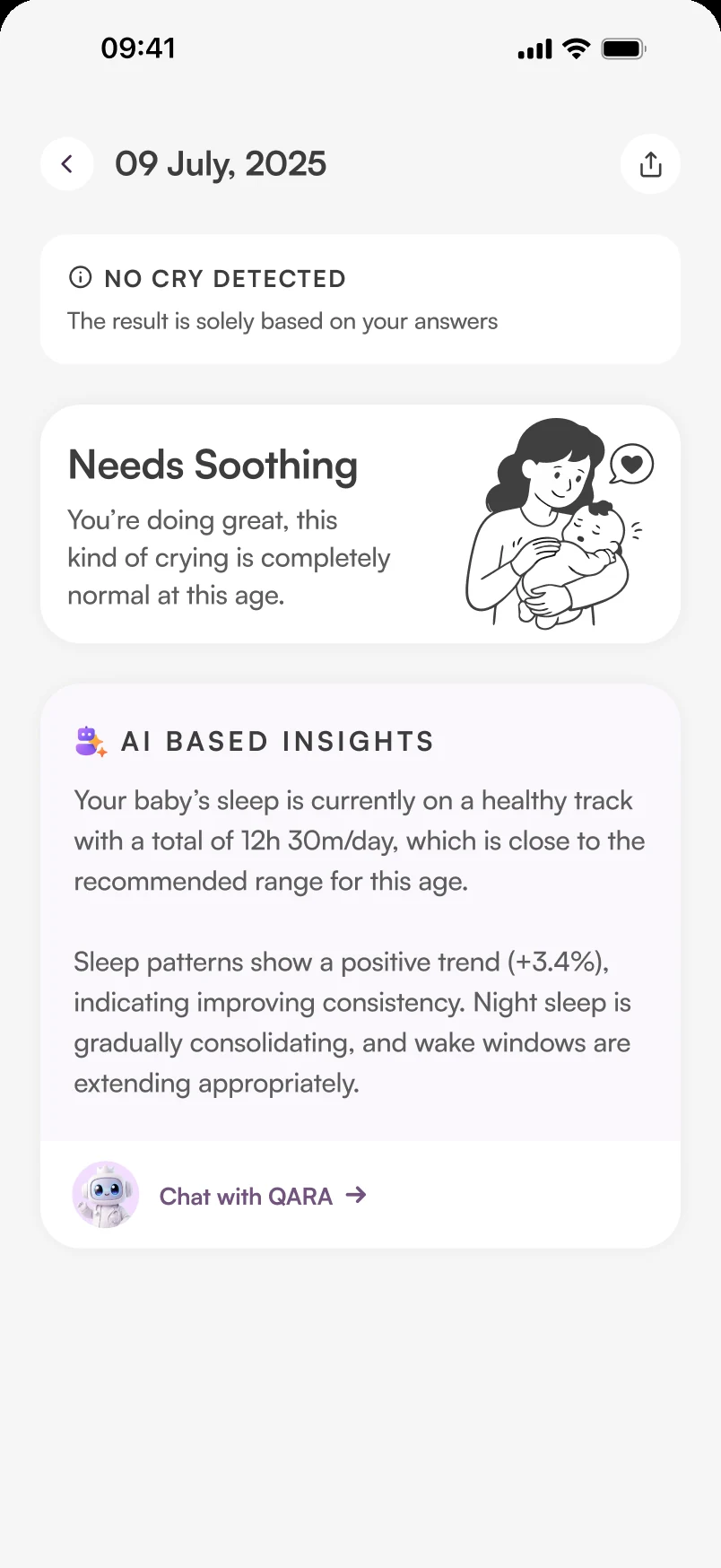
Every screen assumes a parent using it at 2 a.m., one-handed, with a crying baby in the other arm.

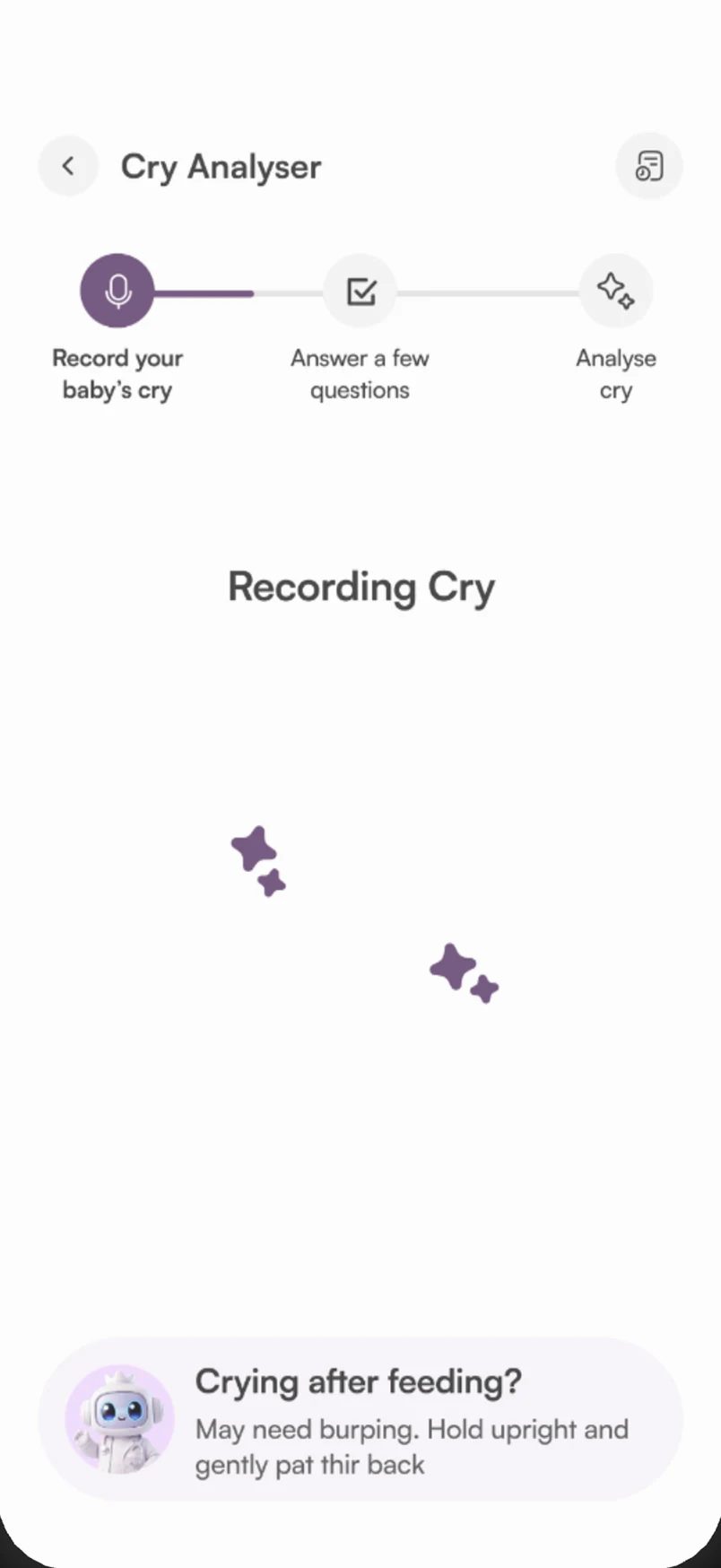
That assumption did most of the design work. It ruled out dense layouts, multi-step forms and anything requiring two thumbs. It is why the key flow, what we called the 2 a.m. path, is measured in seconds: from crying to an answer in under 90 seconds. To get there I moved the clarifying questions behind the recording step, so a panicking parent records first and answers later, and kept the escalation options permanently visible on the report screen.

Four decisions held the rest of the product together:

Plain language before medical labels. A parent needs to know what to do, not what it is called.
AI that shows its reasoning. Every insight carries its logic and doctor-verified sourcing, because an unexplained answer about a baby is worth nothing.
Logging stays optional. Quick or detailed, never mandatory, because a product that punishes you for skipping a day gets deleted.
One-handed by default. Reach, tap targets and hierarchy all built around it.

Sanju VishwashHow I solved it
Case study — Pukaar.ai08 / 11
In the work
Sanju VishwashScreens
Case study — Pukaar.ai09 / 11
The solution

What shipped

Pukaar.ai shipped with four connected features: a Cry Analyzer, AI-guided infection screening, on-demand expert support (paediatrics, lactation, psychology, nutrition) and verified parent education, on a design system built to carry the longer-term vision of a full AI-powered infant health record.

It is about ending the not-knowing, at the hour when nobody else is awake.

Zero to live in 15 weeks. Before launch it had a waitlist of 154+, 12+ daily active users and 50+ queries a day.

Sanju VishwashWhat shipped
Case study — Pukaar.ai10 / 11
What worked

What worked

Building the research community before the product: 400+ parents asking real questions daily beat any scheduled study. Designing for one named moment, 2 a.m. one-handed, instead of a generic user. Putting the recording before the questions, because it matched how a panicking parent actually behaves. Making the AI show its reasoning, which is what earned trust from both parents and paediatricians.

Sanju VishwashWhat worked
Case study — Pukaar.ai11 / 11
Next time

What I'd do differently

Usability-test the 2 a.m. path with genuinely sleep-deprived parents, not rested ones in a calm room. Define the measurement plan before launch so the 90-second target is proven, not just designed for. Involve the paediatricians earlier in wording the AI explanations, because some clinical phrasing had to be rewritten late.

Sanju VishwashWhat I'd do differently

// Case studies

More work

Tap a card for the full story

// Let's talk

You seem cool, let's connect?

Want the thinking behind this one?

Hiring for a design role, or have an idea that needs shaping? Drop me a line. I read every message, and I reply to all of them.